

Blog
How to Get Started with a House Rewire
Make the first conversation useful
Before discussing a rewire, it helps to separate what you have observed from what you suspect. A light that flickers, a socket that has stopped working or a circuit that trips is worth noting, but none of these signs alone confirms that the whole property needs rewiring. A qualified electrician needs to assess the installation and understand how the property is used.
If you are considering a rewire in Atherton, start by recording the details you can see and safely describe. This gives us a clearer starting point when you get in touch with Safe Elec UK (WM) Ltd. It does not require you to investigate inside the electrical system.
What you can check safely
Walk through the property and make a simple room by room note. Record where sockets, switches and lights are, and mark anything that does not work as expected. Note any recurring issues, such as a particular circuit losing power or a problem appearing when certain appliances are in use. Include when you first noticed it and whether it happens repeatedly. These observations can help explain the situation, but they are not a diagnosis.
Think about how the property is used as well as what is installed. Do you regularly need extension leads because sockets are inconveniently placed? Are you planning a new kitchen, an extension or a change to how rooms are used? A rewire is a significant opportunity to consider the electrical layout alongside those plans. If the intended layout is still changing, say so. The proposed position of appliances, lighting and sockets can affect what needs to be discussed before work is planned.
Gather any information you already have about the installation. Previous electrical reports, certificates, notes from earlier work or plans showing later alterations may help provide context. Do not worry if you cannot find them. Their absence does not establish the condition of the wiring, and it should not prevent you from explaining what you know about the property.
Do not open up the installation to investigate
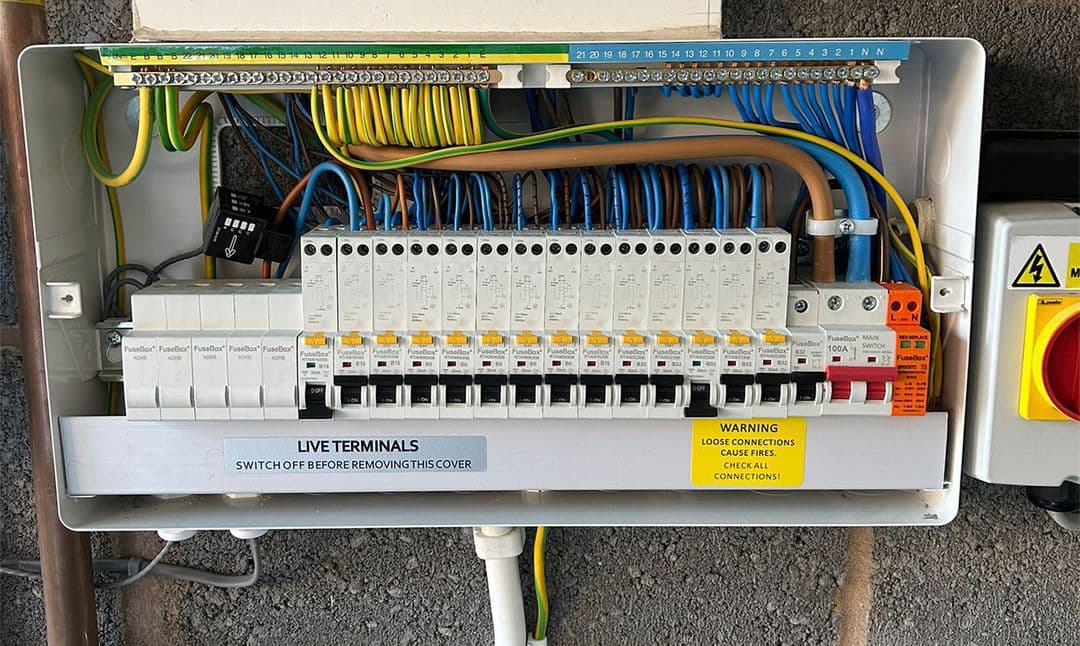
There is a clear boundary between gathering useful information and carrying out electrical checks. Do not remove socket or switch fronts, open the consumer unit (fuse box), pull cables out or attempt to test wiring yourself. A visual check of accessible fittings cannot show the condition of cables hidden in walls, floors or ceilings. Opening equipment can expose you to danger and may damage the installation.
If you notice scorching, damaged fittings, unusual heat, buzzing or a burning smell, treat that as a safety concern rather than a clue to investigate. Stop using the affected fitting or equipment. If you can identify and switch off the relevant circuit safely, do so. Otherwise, do not handle the equipment or attempt to find the fault yourself. Seek advice from a qualified electrician promptly.
Describe the property and the changes you need
When you make an enquiry, share the property type as you understand it, which parts of the building are involved, any known alterations and the electrical issues you have noticed. Explain whether the property is occupied and whether building work is planned. These details help establish the context for discussing the scope. They do not replace an assessment of the existing installation.
Be clear about the outcome you are looking for, not just the symptoms. For example, you might want to understand whether the existing installation can support a planned change, or you may already have concerns about its condition. If you are unsure whether you need a full rewire or a different kind of electrical work, say that plainly. It is better to describe the uncertainty than to settle on a diagnosis before the installation has been assessed.
You can also prepare questions about what areas may be affected, what access could be needed and what decisions you may need to make about the layout. The answers depend on the property and the scope of work, so general advice cannot determine the plan for your home.
A sound starting point, without guesswork
Getting started does not mean diagnosing hidden wiring or deciding the full scope alone. Your part is to describe the property, its known history, the issues you have noticed and the changes you want to make. Leave inspection and decisions about the electrical work to a qualified electrician.
For an overview of the service, read about our Rewires. If you are ready to discuss your property in Atherton, contact Safe Elec UK (WM) Ltd with the information you have gathered, even if some details are still unknown.
Other Articles